Laminate vs. Luxury Vinyl Plank: Which Is the Better Choice for DFW Homes?
Both look like wood. Both cost less than hardwood. But one handles Texas moisture and slab foundations far better than the other. Here is the honest comparison.
Walk into any flooring store and you will find laminate and luxury vinyl plank displayed side by side, often looking nearly identical. Both mimic the look of hardwood at a lower price. Both are available in dozens of wood-look styles. Both are marketed as durable and easy to maintain.
But they are fundamentally different products — and in a Texas home, that difference matters. Here is the honest comparison.
What Is Laminate Flooring?
Laminate is a multi-layer product with a high-density fiberboard (HDF) core, a photographic layer printed to look like wood or stone, and a clear wear layer on top. The image layer is a photograph — not real wood — but modern printing technology has made it convincingly realistic.
The HDF core is the key limitation: it is wood-based and absorbs moisture. Expose laminate to standing water, high humidity, or a wet slab, and the core swells, the edges lift, and the floor is ruined. It cannot be dried out and restored — it must be replaced.
What Is Luxury Vinyl Plank?
LVP is also a multi-layer product, but its core is 100% plastic — typically a rigid composite or stone-plastic composite (SPC). The top surface is a photographic vinyl layer with a clear wear layer. Because the entire product is plastic, it is completely waterproof.
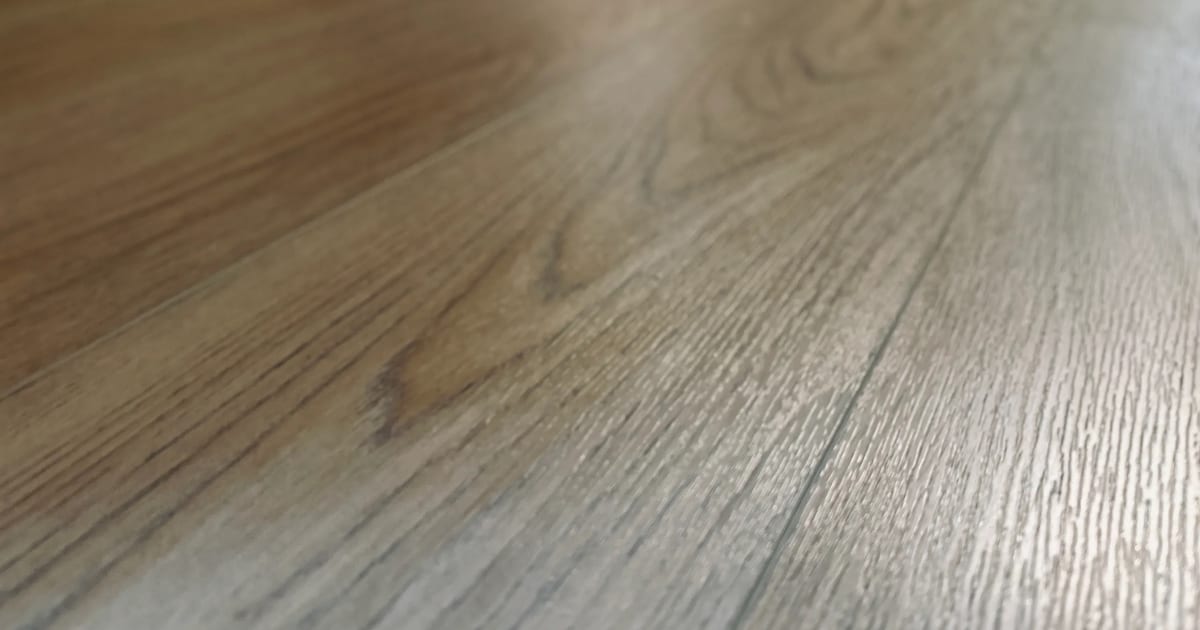
Modern LVP has come a long way from the vinyl flooring of the 1980s. High-resolution printing, embossed textures, and realistic plank dimensions make quality LVP difficult to distinguish from hardwood at a glance.
The Critical Difference: Water and Moisture
This is where the comparison is decided for most DFW homeowners.
Laminate: Not waterproof. The HDF core swells when exposed to moisture. This is a real risk in Texas homes because:
- Slab-on-grade foundations (the majority of DFW homes) can transmit moisture vapor upward
- Humidity swings from aggressive air conditioning can affect the core over time
- Any spill that sits for more than a few minutes can penetrate the seams
LVP: 100% waterproof. The plastic core does not absorb moisture. It can be installed directly over concrete, in kitchens, bathrooms, laundry rooms, and anywhere else in the home. Spills can be cleaned up at your convenience without damage.
For a DFW home on a slab foundation, this difference alone makes LVP the more practical choice in most rooms.
Durability and Wear Resistance
Both products use a clear wear layer on top to protect against scratches and scuffs. The thickness of this wear layer — measured in mils (thousandths of an inch) — determines durability.
Laminate: Wear resistance is measured by the AC rating system (AC1–AC5). AC3 is the minimum for residential use; AC4 is better for high-traffic areas. Laminate is generally scratch-resistant but can chip at edges if heavy objects are dropped on it.
LVP: Wear layer thickness ranges from 6 mil (light residential) to 30 mil (commercial). For a DFW home with kids or pets, 12 mil is the minimum; 20 mil is better. LVP is more resistant to denting and edge chipping than laminate because the plastic core is more flexible.
Winner: LVP, particularly for homes with pets or heavy traffic.
Sound and Feel Underfoot
Laminate has a reputation for a hollow, clicky sound underfoot — the result of a floating installation over a hard subfloor. Quality underlayment reduces this significantly, but it does not eliminate it entirely.
LVP, particularly thicker SPC products (6 mm and up), feels more solid underfoot and produces less hollow sound. Many LVP products come with an attached underlayment that further reduces noise.
Winner: LVP, especially thicker SPC products.
Installation
Both products are typically installed as floating floors — planks click together edge-to-edge without adhesive or fasteners. This makes both relatively DIY-friendly, though professional installation produces better results, particularly at transitions and in rooms with irregular shapes.
Laminate: Requires a moisture barrier over concrete. Even with a barrier, many manufacturers void the warranty for below-grade or on-grade concrete installations.
LVP: Can be installed directly over concrete without a moisture barrier in most cases (check manufacturer specs). Works above grade, on grade, and below grade.
Winner: LVP for DFW slab-on-grade homes.
Cost Comparison
Both products are available across a wide price range. In general:
- Laminate: $2–$5 per square foot for materials; $1.50–$3 per square foot for installation
- LVP: $2–$7 per square foot for materials; $1.50–$3 per square foot for installation
Entry-level LVP and mid-range laminate are similarly priced. Premium LVP costs more than premium laminate, but the performance gap justifies the difference for most DFW applications.
Winner: Roughly equal at entry level; LVP is worth the premium at mid-range and above.
Appearance and Style Options
Both products are available in a wide range of wood-look styles, from light Scandinavian oak to dark walnut. Modern printing technology makes both convincingly realistic.
Laminate tends to have a slightly more uniform appearance because the photographic layer repeats. LVP, particularly embossed-in-register (EIR) products, aligns the texture with the printed grain for a more realistic feel.
Winner: LVP at mid-range and above; roughly equal at entry level.
Resale Value
Neither laminate nor LVP adds as much resale value as real hardwood, but both are an upgrade over carpet. In the DFW market, LVP has become the standard for new construction and remodels, which means buyers recognize and expect it. Laminate is increasingly seen as a dated choice.
Winner: LVP.
Side-by-Side Summary
| Factor | Laminate | LVP |
|---|---|---|
| Core material | HDF (wood-based) | Plastic (SPC or WPC) |
| Waterproof | No | Yes |
| Suitable for concrete slab | Risky | Yes |
| Suitable for bathrooms/kitchens | No | Yes |
| Wear layer | AC rating system | Mil thickness (12–20 mil recommended) |
| Sound underfoot | Hollow (floating) | More solid (SPC) |
| Refinishing | No | No |
| Typical material cost | $2–$5/sq ft | $2–$7/sq ft |
| Resale value | Lower | Higher |
| Best for DFW | Limited use cases | Most rooms |
When Laminate Still Makes Sense
Laminate is not a bad product — it is simply the wrong product for many DFW applications. It can be a reasonable choice for:
- Above-grade rooms with wood subfloors and no moisture risk
- Rental properties or short-term applications where cost is the primary concern
- Rooms with very low traffic and no pets
For any room on a slab, near moisture, or in a home where you want a product that will last 15+ years, LVP is the better investment.
Frequently Asked Questions
Can you tell the difference between laminate and LVP by looking at them? At entry level, they look very similar. At mid-range and above, LVP typically has more realistic texture and grain detail. The easiest way to tell them apart is to look at the edge of a plank — laminate has a visible HDF core; LVP has a plastic core.
Is LVP better than laminate for homes with dogs? Yes. LVP is waterproof (important for accidents), more resistant to scratching with a thick wear layer, and does not have the edge-chipping vulnerability of laminate. Choose a product with at least a 20-mil wear layer for homes with large or active dogs.
Does DR.FLOOR install both laminate and LVP? Yes. We install LVP and laminate throughout the DFW area. During your free in-home estimate, we can show you samples of both and help you choose the right product for your specific rooms and subfloor conditions.
How long does LVP last compared to laminate? Quality LVP with a 20-mil wear layer is rated for 25+ years in residential use. Laminate typically carries a 15–25 year warranty but is more vulnerable to moisture damage that can shorten its life significantly in DFW conditions.
Explore Topics
Written by
DR.FLOOR Team
Content creator and writer sharing insights and stories.