Hardwood Floor Installation Cost in DFW: What to Expect in 2026
Material grades, room size, subfloor prep, and finish choices all affect what you pay. Here is what DFW homeowners actually spend on hardwood floor installation.
Hardwood flooring is one of the highest-return investments a DFW homeowner can make. But "how much does it cost?" is rarely a simple answer. The price depends on the wood species, grade, and width you choose, the condition of your subfloor, whether you want a site-finished or prefinished product, and the square footage of the space. This guide breaks down each cost driver so you can budget accurately before you call for an estimate.
Average Cost Range in the DFW Area
For a professionally installed solid or engineered hardwood floor in the Dallas–Fort Worth metroplex, most homeowners spend between $8 and $18 per square foot installed — covering both materials and labor. A 500-square-foot living room therefore typically runs $4,000–$9,000 depending on the choices below.
That range is wide because hardwood is not a commodity. A builder-grade 2¼-inch red oak strip floor sits at the low end. A custom-width white oak floor with a hand-scraped texture and oil finish sits at the high end. Most mid-range projects land between $10 and $13 per square foot installed.
What Drives the Cost
1. Wood Species and Grade
Species is the single biggest material variable. Domestic species — red oak, white oak, hickory, maple — are generally less expensive than imported exotics like Brazilian cherry or tigerwood. Within any species, grade determines how uniform the boards look:
- Select and Better / Clear: minimal knots, consistent color, premium price
- #1 Common: some character marks, moderate price
- #2 Common: more knots and color variation, lowest price per board
For most DFW homes, white oak #1 Common or red oak Select strikes the best balance of appearance and value.
2. Board Width and Profile
Wider boards (5 inches and up) cost more per square foot than traditional 2¼-inch or 3-inch strip flooring. They also require more precise subfloor flatness, which can add labor. Engineered products in wide widths are often more dimensionally stable than solid wide-plank in Texas's climate swings.
3. Solid vs. Engineered Hardwood
Solid hardwood (¾-inch thick) can be sanded and refinished many times over its life but is sensitive to moisture and humidity changes — a real consideration in DFW summers. Engineered hardwood has a real wood veneer over a plywood core, making it more stable and suitable for slab-on-grade installations common in North Texas.
Engineered products typically run $1–$3 per square foot less on materials, but installation costs are similar. Over a 20-year horizon, solid hardwood's refinishing potential often makes it the better long-term value in above-grade rooms.
4. Prefinished vs. Site-Finished
Prefinished hardwood arrives from the factory with a UV-cured aluminum oxide finish. Installation is faster, the floor is usable within 24 hours, and the factory finish is extremely durable. The trade-off: a small beveled edge between boards that collects dust, and no ability to customize the sheen or stain on-site.
Site-finished hardwood is sanded, stained (if desired), and finished after installation. The result is a seamless surface with no bevels, and you have complete control over color and sheen. It adds 2–4 days to the project and costs $2–$4 per square foot more in labor. For open-plan spaces where you want a truly custom look, site-finishing is worth it.
5. Subfloor Condition
This is the cost variable homeowners most often overlook. A hardwood installation is only as good as what is underneath it. If your subfloor has:
- High spots or low spots exceeding ⅛ inch over 6 feet, it must be ground or filled before installation
- Squeaks from loose subfloor panels, which need to be screwed down
- Moisture issues from a slab or crawl space, which require a vapor barrier or moisture mitigation system
- Old adhesive or leveling compound from a previous floor that must be removed
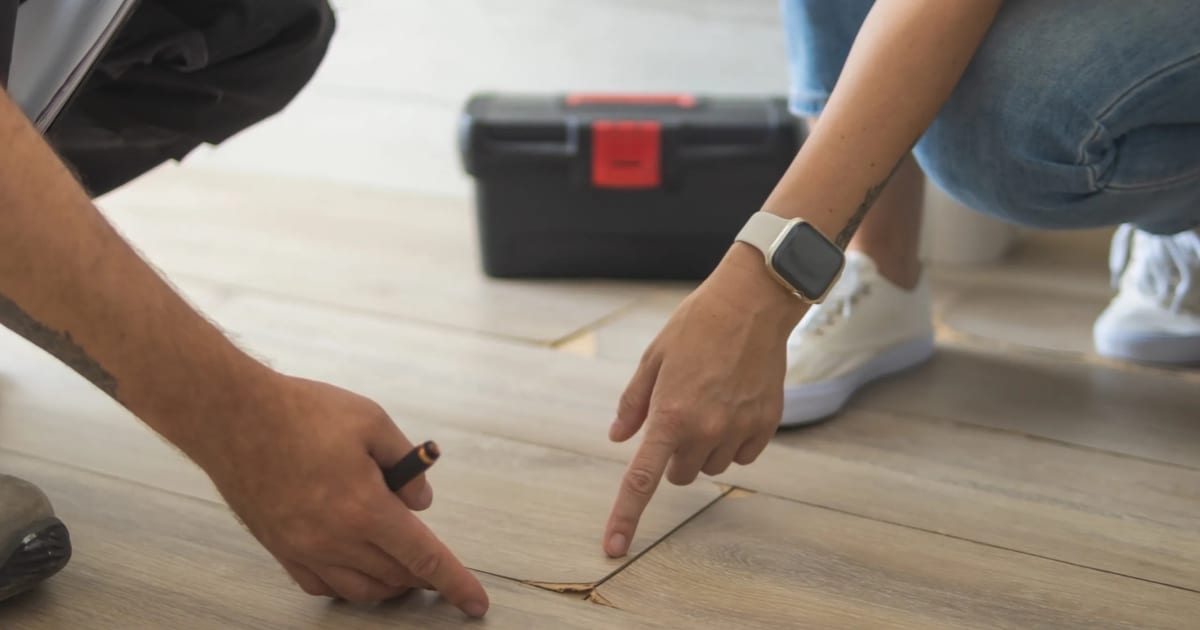
…each of these adds labor and materials to the project. A professional installer will assess your subfloor during the estimate. Do not skip this step — subfloor problems discovered mid-installation are far more expensive to fix than ones caught upfront.
6. Removal and Disposal of Existing Flooring
If you are replacing carpet, tile, or an old wood floor, removal and disposal typically adds $1–$2 per square foot. Tile removal is at the high end of that range because of the labor involved in breaking up and hauling away the material.
7. Stairs
Stair nosing, risers, and treads are priced per step rather than per square foot. Expect $75–$150 per step for a standard straight staircase, depending on the species and whether the risers are painted or wood-matched.
8. Furniture Moving
Most professional installers will move standard furniture for a fee, or you can clear the room yourself to save money. Heavy items like pianos, pool tables, and built-in cabinetry are typically excluded.
Cost by Room: DFW Examples
| Room | Approx. Sq. Ft. | Estimated Installed Cost |
|---|---|---|
| Master bedroom | 200–250 | $1,800–$4,000 |
| Living room | 400–600 | $3,500–$9,000 |
| Open-plan kitchen/dining/living | 800–1,200 | $7,000–$18,000 |
| Whole home (2,000 sq. ft.) | 1,800–2,200 | $16,000–$36,000 |
Ranges reflect mid-grade domestic hardwood, standard subfloor prep, and professional installation in the DFW market.
What Is Not Included in Most Quotes
When comparing estimates, confirm whether the quote includes:
- Acclimation time — hardwood must sit in your home for 3–5 days before installation to adjust to local humidity. Some contractors charge for this; others include it.
- Transitions and thresholds — the metal or wood strips where hardwood meets tile, carpet, or another room
- Baseboard removal and reinstallation — or quarter-round shoe molding if baseboards stay in place
- Staining — if you want a custom color rather than the natural wood tone
A complete, itemized quote should cover all of these. If it does not, ask.
How to Get an Accurate Estimate
The only way to get a reliable number is an in-home measurement and subfloor assessment. Square footage from a floor plan is a starting point, but it does not account for waste factors (typically 7–10% for straight-lay patterns, 15% for diagonal or herringbone), subfloor conditions, or room-specific challenges like bay windows or irregular angles.
DR.FLOOR provides free in-home estimates for DFW homeowners. We measure accurately, assess your subfloor honestly, and give you a written quote that covers everything — no surprises at the end of the project.
Frequently Asked Questions
Is hardwood flooring worth the investment in DFW? Yes. Hardwood consistently ranks among the top flooring choices for resale value in the North Texas market. Buyers recognize and pay a premium for real wood floors, and a well-maintained hardwood floor can last the life of the home.
Can I install hardwood over a concrete slab? Solid hardwood is not recommended directly over concrete because concrete holds moisture. Engineered hardwood with a proper vapor barrier is the standard solution for slab-on-grade installations, which are common in DFW new construction.
How long does installation take? A typical 500–800 square foot room takes 1–2 days for installation plus 2–4 days for site-finishing if applicable. Larger projects or those requiring significant subfloor prep take longer. Your installer should give you a realistic timeline during the estimate.
What is the best hardwood species for DFW homes? White oak and red oak are the most popular choices in North Texas. Both are widely available, durable, and take stain well. White oak has a tighter grain and slightly more neutral tone, making it versatile for modern and transitional interiors. Hickory is a good choice for high-traffic homes with pets.
Does DR.FLOOR offer financing? Yes. Ask about financing options when you schedule your free estimate.
Explore Topics
Written by
DR.FLOOR Team
Content creator and writer sharing insights and stories.